

You found a house you love. The offer was accepted. Now comes the part that makes a lot of buyers nervous, the home inspection. I have been through this process with countless clients, and I know how stressful it can feel. You are excited about the house, but you are also wondering what might be hiding behind the walls or under the floorboards.
Here is the thing. A home inspection is not something to fear. It is actually one of the best tools you have as a buyer. It tells you what is really going on with the property so you can make an informed decision. No surprises after you move in. No expensive repairs you did not see coming.
If you are getting ready for an inspection or just want to know what to expect, this guide will walk you through the entire process. From what inspectors actually look for to how to read the report and what to do next, I have got you covered.
Key Takeaways
- A standard home inspection covers the major systems of the home, including the roof, foundation, electrical, plumbing, and HVAC.
- Inspectors do not pass or fail a home. They simply report on its condition so you can make an informed decision.
- You should always attend the inspection so you can see issues firsthand and ask questions.
- The inspection report will include a mix of major defects, minor issues, and maintenance recommendations.
- Not all issues are deal breakers. Focus on safety concerns and major structural problems.
- You can negotiate repairs, request a credit, or walk away depending on what the inspection reveals.
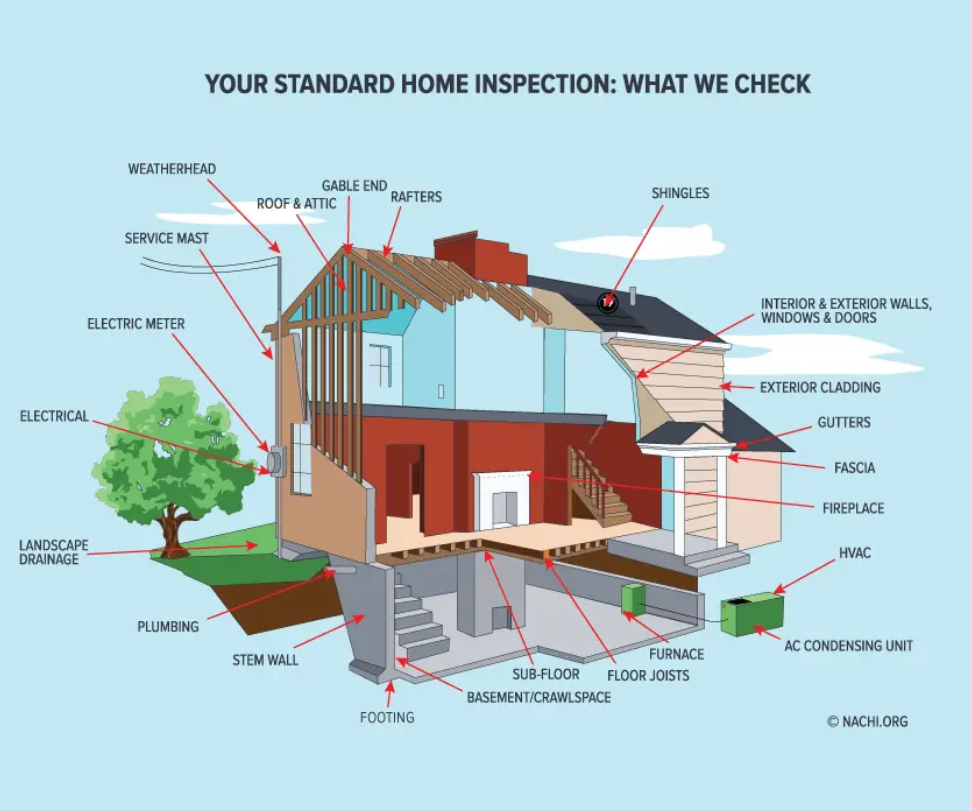
What a Home Inspection Actually Covers
A standard home inspection is a visual examination of the property's accessible areas. Inspectors look at the major systems and components to assess their condition. Here is what they typically evaluate:
Structural Components
The inspector will check the foundation, crawl spaces, and basements for cracks, water damage, or signs of settling. They look at the framing, walls, and roof structure to make sure everything is sound.
Roof and Attic
They will examine the roof covering, flashing, chimneys, and gutters. In the attic, they look for proper insulation, ventilation, and any signs of leaks or water damage.
Exterior
This includes siding, windows, doors, decks, porches, and grading around the foundation. They are checking for water intrusion issues and general wear and tear.
Plumbing
Inspectors test water pressure, check for leaks, and look at the water heater, pipes, and fixtures. They also check for proper drainage and any signs of corrosion.
Electrical
They will inspect the electrical panel, wiring, outlets, and light fixtures. They are looking for safety hazards like outdated wiring or improper installations.
Heating and Cooling
The inspector will test the furnace, air conditioning, and ductwork to make sure they are functioning properly and are appropriately sized for the home.
Interior
This includes walls, ceilings, floors, windows, doors, and stairways. They look for cracks, water stains, and general condition.
Appliances
If appliances are included in the sale, the inspector will typically test them to make sure they are in working order.
What Inspectors Do Not Look For
A standard home inspection has limits. Inspectors do not move furniture or personal belongings, so they cannot see everything. They do not test for mold, radon, lead, or asbestos unless you pay for specialized testing. They do not evaluate the condition of septic systems or wells. And they do not inspect areas that are not accessible, like behind walls or under finished floors.
If you are concerned about any of these items, you may need to hire a specialist for additional testing.
The Difference Between Major Defects and Minor Issues
One of the most common questions I hear from buyers is whether they should walk away from a deal based on the inspection report. The answer depends on what the report actually says.
Major Defects
These are issues that affect the safety, structural integrity, or livability of the home. Examples include foundation cracks, a leaking roof, faulty wiring, or a failing HVAC system. These are the items you need to pay attention to because they can be expensive to fix and may be deal breakers.
Minor Issues
These are things like a dripping faucet, a loose doorknob, or a cracked windowpane. They are easy to fix and not worth losing a house over.
Maintenance Recommendations
Inspectors will often point out things that are not urgent but should be addressed over time. This might include cleaning gutters, sealing windows, or trimming trees near the house.
Focus on the major defects. The minor stuff is usually negotiable or something you can handle after you move in.
Should You Attend the Inspection
Yes, absolutely. I always encourage my clients to be there for the inspection. Here is why.
Being there allows you to see issues firsthand instead of just reading about them in a report. You can ask the inspector questions as they go and get a better understanding of the home's condition. You will also learn where the shutoff valves, electrical panel, and other important components are located.
Plus, seeing the house through the inspector's eyes helps you understand what is a big deal and what is not. That context is valuable when you are reviewing the report and deciding how to proceed.
How to Read the Inspection Report
The inspection report can be long and detailed, but do not let that overwhelm you. Here is how to break it down.
Look for the summary section first. Most reports include a summary of the major issues. Start there to get the big picture. Then review the details of any items that concern you. The report will usually include photos and descriptions so you can see exactly what the inspector found.
Pay attention to safety issues and structural problems first. These are the items that could be expensive or dangerous. Then look at systems that are nearing the end of their lifespan. A water heater that is 15 years old is not a defect, but you should know it may need to be replaced soon.
And remember, no house is perfect. Even new construction will have some items on the report. The question is not whether there are issues, but whether the issues are manageable.
What Happens After the Inspection
Once you have the inspection report, you have a few options depending on what was found.
Request Repairs
You can ask the seller to fix certain items before closing. This works best for major defects that are clear and straightforward, like a broken furnace or a roof leak.
Request a Credit
Instead of asking the seller to make repairs, you can ask for a credit at closing. This gives you the money to handle the repairs yourself after you move in. This is often a good option because you can choose your own contractors and make sure the work is done to your standards.
Negotiate the Price
If the inspection reveals significant issues, you can ask for a price reduction. This is common when the repairs are costly and the seller is not willing to make them.
Walk Away
If the inspection uncovers major problems that the seller is not willing to address, you can walk away from the deal. This is why the inspection contingency is so important. It gives you an out if the home is not what you expected.
Your agent will help you navigate these conversations and determine the best approach based on the specific situation.
Specialized Inspections You Might Need
In some cases, a standard inspection is not enough. Depending on the property and your concerns, you may want to consider additional testing.
Mold Testing
If you notice a musty smell or see signs of moisture, mold testing can identify potential health hazards.
Radon Testing
Radon is a colorless, odorless gas that can be harmful at high levels. Testing is relatively inexpensive and worth doing.
Termite and Pest Inspection
Wood destroying insects can cause serious damage. A pest inspection is especially important for older homes.
Septic and Well Inspection
If the home has a septic system or well, you will need a specialized inspection to make sure they are functioning properly.
Chimney Inspection
If the home has a fireplace, a chimney inspection can identify safety hazards like creosote buildup or structural issues.
Your inspector can recommend which additional tests make sense for your specific property.
Common Questions I Hear From Buyers
Q: Do I have to be there for the inspection?
No, but it is highly recommended. Being there lets you see issues firsthand and ask questions as the inspector goes through the home.
Q: Can a house fail an inspection?
No. Inspectors do not pass or fail homes. They simply report on the condition so you can make an informed decision.
Q: What if the inspection finds something major?
You can negotiate repairs, ask for a credit, request a price reduction, or walk away depending on the severity of the issue and the seller's willingness to address it.
Q: How much does a home inspection cost?
In Western New York, a standard home inspection typically costs between $300 and $500. Specialized inspections like mold or radon testing may cost extra.
Q: What is the difference between an inspection and an appraisal?
An inspection evaluates the physical condition of the home. An appraisal determines the market value for the lender. They serve different purposes and both are important.
Q: What if the seller refuses to make repairs?
You have options. You can ask for a credit instead, negotiate a lower price, or walk away if the issues are significant enough. Your agent can help you decide the best approach.
Q: How long does an inspection take?
A standard inspection typically takes 2 to 4 hours depending on the size and condition of the home.
Check out this article next